Gauge reference
Wire sizes we buy: #14 through 1000 MCM
If you know the gauge or the MCM, you are most of the way to a quote. This reference shows where each size is normally used and which constructions we see most often in Alabama.
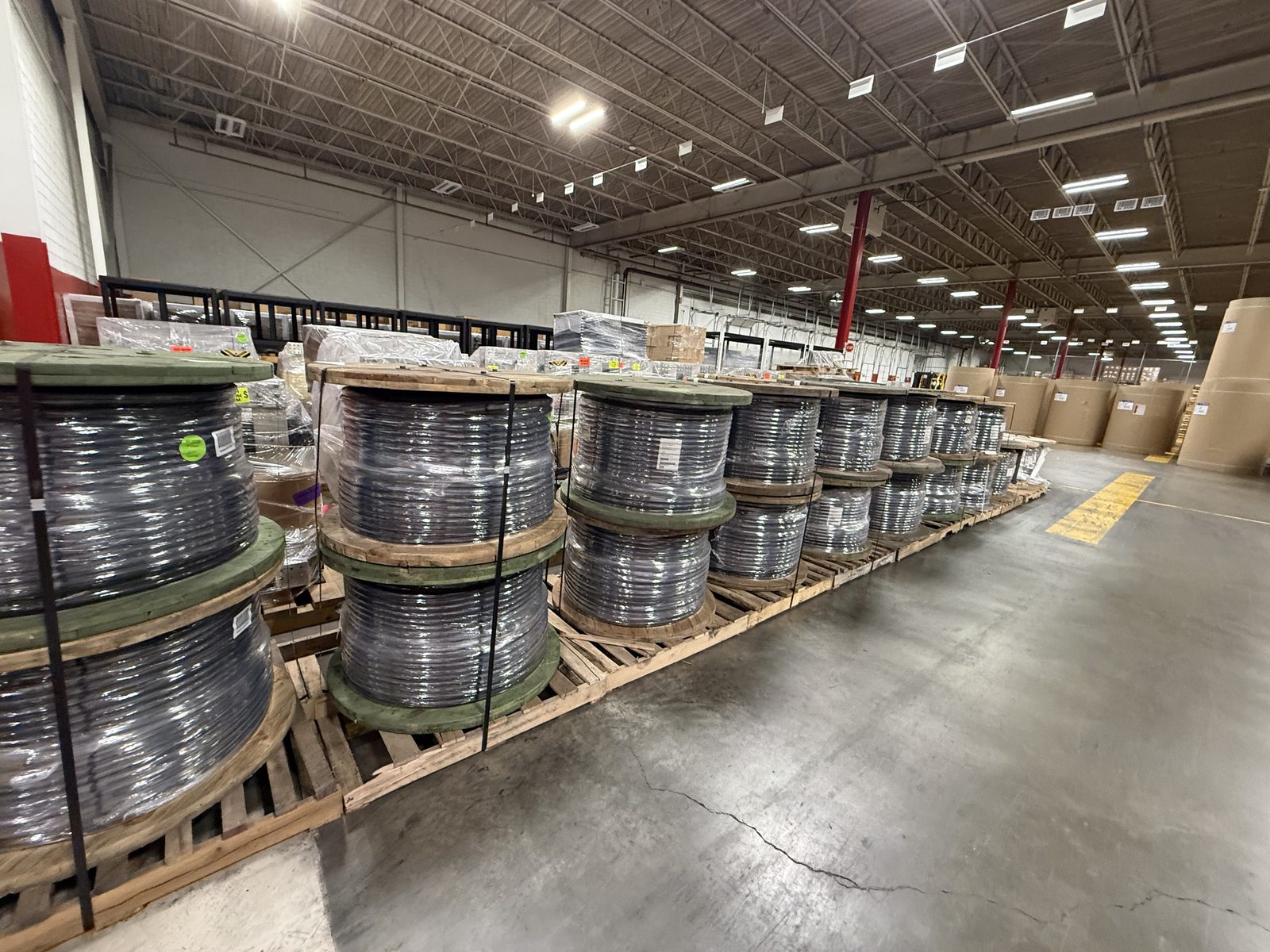
Where each size shows up
Applications below are typical, not prescriptive — the same gauge appears in branch circuits, feeders and industrial control work. Ampacities depend on insulation, temperature rating, conduit fill and the code edition in force.
| Size | Typical use | Common constructions |
|---|---|---|
| #14 | 15 A branch circuits, control wiring, fixture whips | THHN/THWN-2, XHHW-2, MC, fixture wire |
| #12 | 20 A receptacles and lighting circuits, the most common commercial size | THHN/THWN-2, XHHW-2, MC, SER |
| #10 | 30 A circuits, small motors, rooftop units | THHN/THWN-2, XHHW-2, MC, SOOW |
| #8 | 40 A feeders, ranges, subpanels, grounding electrode conductors | THHN/THWN-2, XHHW-2, SER, bare copper |
| #6 | 50–60 A feeders, service laterals, larger equipment | THHN/THWN-2, XHHW-2, SER/SEU, URD |
| #4 | 70–85 A feeders, panel to panel, larger HVAC | THHN/THWN-2, XHHW-2, SER, USE-2 |
| #2 | 95–115 A feeders, service entrance, subfeeders | THHN/THWN-2, XHHW-2, SER/SEU, URD |
| #1 | 110–130 A feeders and service conductors | THHN/THWN-2, XHHW-2, SER, USE-2 |
| 1/0 | 120–150 A services, large feeders | THHN/THWN-2, XHHW-2, SER, URD, USE-2 |
| 2/0 | 150–175 A services and feeders | THHN/THWN-2, XHHW-2, SER, URD |
| 3/0 | 175–200 A services, main feeders | THHN/THWN-2, XHHW-2, SER, URD |
| 4/0 | 200–230 A services, large distribution | THHN/THWN-2, XHHW-2, SER, URD, USE-2 |
| 250 MCM | 250–300 A feeders, parallel runs, industrial distribution | THHN/THWN-2, XHHW-2, tray cable, 15kV |
| 300 MCM | 285–350 A feeders, switchgear and MCC connections | THHN/THWN-2, XHHW-2, tray cable, 15kV |
| 350 MCM | 310–400 A feeders, service entrance, utility work | THHN/THWN-2, XHHW-2, tray cable, 25kV |
| 400 MCM | 350–450 A feeders and industrial distribution | THHN/THWN-2, XHHW-2, tray cable, 25kV |
| 500 MCM | 380–500 A feeders, parallels, substation ties | THHN/THWN-2, XHHW-2, tray cable, 35kV |
| 600 MCM | 475–600 A feeders and heavy industrial runs | THHN/THWN-2, XHHW-2, tray cable |
| 750 MCM | 535–700 A feeders and utility distribution | THHN/THWN-2, XHHW-2, tray cable, 35kV |
| 1000 MCM | 615–800 A feeders, parallels, high-amp industrial | THHN/THWN-2, XHHW-2, tray cable, 69kV+ |
The four numbers that price a reel
A reel tag usually carries more information than a seller needs to send, but four items decide most of the value:
- Type — THHN/THWN-2, XHHW-2, MC, SER, tray cable, EPR, XLPE. The type tells us insulation, jacket and where the cable can be installed.
- Size — AWG (#14 through #1) or MCM (250 through 1000). Compact stranded aluminum and stranded copper price differently.
- Voltage — 600 V building wire versus 5kV, 15kV, 25kV, 35kV or 69kV cable. Medium-voltage stock is a different market.
- Footage — printed on the tag for full reels, marked on the flange for partials, or estimated from reel diameter and wrap count.
Conductor count matters for multi-conductor cable (2/C, 3/C, 4/C plus ground), and so does the presence of a ground conductor in MC and SER. A tag photo answers all of it at once.
Both are in scope, and they are not interchangeable
Copper and aluminum wire are both bought, but they are priced on different fundamentals and used differently. Copper carries more current per circular mil and is standard for branch circuits and most industrial work. Aluminum is common in service entrance, feeders, URD and utility distribution, where larger sizes and lower weight matter.
When you send an inquiry, say which metal you have. For mixed lots, list copper and aluminum separately with approximate footages — it turns a vague pallet into a quotable inventory.
Also note the condition of the conductor. Bright, untarnished copper in original wrap is straightforward. Aluminum that has been stored outdoors, or copper that has been exposed to moisture, is still considered, but the photos need to show the jacket and the exposed ends.
Send the gauge and the footage
Include the size, metal, voltage class and approximate length. If the tag is unreadable, a tape measure against the conductor works.
Reel tag unreadable?
Photograph the jacket print and the flange. We can usually identify the cable from those two shots.
Keep reading
- Copper and aluminum building wireWire category
- THHN, THWN, THWN-2 and XHHW wireWire category
- MC, AC, tray cable and VFD cableWire category
- SER, SEU, URD and USE-2 cableWire category
- Alabama coverageCities and regions
- How it worksProcess